
Spelthorne will means test level access showers again and halve its no-means-test adaptations limit to £1,000, to save about £108,000 a year.
Disabled residents in Spelthorne who need a level access shower fitted will have their income and savings tested again before the council pays for it.
The council’s Community Wellbeing and Housing Committee approved the change on Tuesday 29 September, according to its published decisions. The officers’ report says the new rules apply from October 2026.
Spelthorne stopped means testing level access showers in 2022. The officers’ report says that is no longer affordable, and that every neighbouring Surrey council already means tests them.
What has changed
The committee agreed to:
- remove the exemption that let level access showers skip the means test
- cut the aids and adaptations disregard from £2,000 to £1,000
- bring Spelthorne’s policy into line with the other Surrey councils before Spelthorne is abolished on 1 April 2027
The aids and adaptations grant pays for smaller jobs such as rails, ramps and half steps without a means test. Under the draft policy, it now covers work up to £1,000, one grant per property.
Who still avoids the means test
The draft policy keeps these groups out of the means test:
- people on a qualifying benefit, such as Guarantee Pension Credit, Housing Benefit or Universal Credit
- anyone who needs a standard stairlift
- a disabled child under 19 who is in education or receiving child benefit
- people with motor neurone disease, or a palliative or end of life diagnosis confirmed by a medical professional
The maximum Disabled Facilities Grant in England stays at £30,000.
How many people it affects
The council has worked out what the changes would have meant last year:
- 12 level access shower applications in 2025/26 would have failed the means test. Each shower cost an average of £7,918, so the council would have saved £95,015.
- 27 homes had aids and adaptations costing between £1,000 and £2,000. The lower limit would have saved about £13,000.
Together that comes to about £108,000 a year.
In 2025/26 the council paid for 141 Disabled Facilities Grants and 527 aids and adaptations jobs.
Why the council says it has to
The report says demand is rising because of an ageing population, more complex cases and higher building costs.
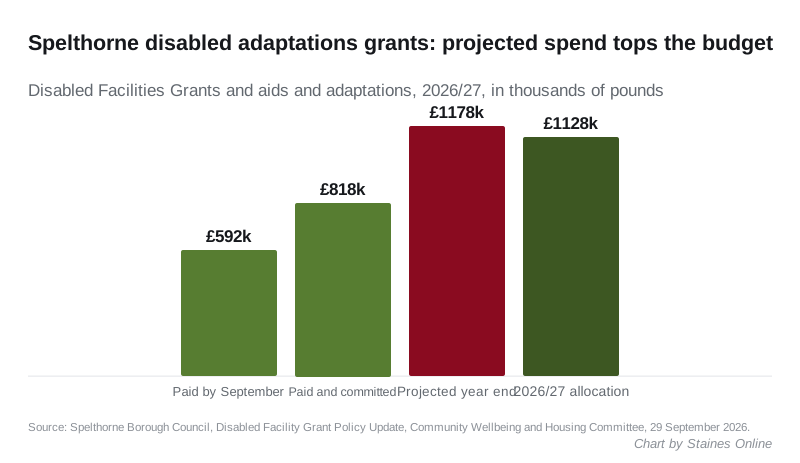
By September the council had paid out £592,283. That was £520,376 in Disabled Facilities Grants and £71,907 in aids and adaptations. Another £235,979 of work was approved but not yet paid.
The report projects spending of about £941,873 by the end of March. With the approved work added, the total reaches about £1.178 million. That is about £50,000 over the council’s 2026/27 grant allocation of £1.128 million.
In June councillors asked whether money left unspent by other councils could be moved to Spelthorne. The report says the government department and Foundations, the national body for the grants, confirmed there is no way to do that. Unspent money goes back through the government’s funding arrangements instead.
What the council admits
The report is open about the downside. It says the change will mean “some residents will now have to contribute financially”. It also says there is a risk “some residents may not adapt their property”. Applications will take longer, because each applicant now needs a full financial assessment.
What it means for you
If you or a relative need a shower adapted, expect to be asked about household income, savings and capital, including a partner’s, unless you fall into one of the groups above. The council uses a standard national calculator to work out whether you pay anything, and how much.
If your application was approved before the change, the report does not say how existing cases will be treated. Ask the council’s grants team.
You can contact:
- Spelthorne’s Disabled Facilities Grants team on 01784 448 607 or dfg@spelthorne.gov.uk
- Surrey County Council’s Spelthorne occupational therapy team, based at the Ashford Centre on Stanwell Road, on 01932 795 292 or Spelthorne.otduty@surreycc.gov.uk
Both contacts are taken from the council’s draft policy.
The same meeting also put off a decision on how Spelthorne buys nightly-paid temporary accommodation. The committee chose to hold a briefing for all councillors before the plan goes to full council. Three other items were deferred to the next meeting on 17 November.
For the council’s other housing decisions this autumn, see our report on the six homes Spelthorne is buying.
Have your say